To show that Domo can become a feasible and viable business, we tested our largest assumptions directly with our key stakeholders. In summary, these assumptions fall into 5 main categories.
Assumption 1: Renters spend a lot of time scheduling viewings and are looking for a faster way.
Reasons:
Understand renter’s pain points in the renting experience
Measure the time renters spend on administrative tasks to schedule viewings
Gather insights on Domo's user experience
Inform our business strategy and model based on renter needs
Success Metrics: A waitlist of 30 users who resonate with this problem and explicitly indicate interest in Domo.
Semi-structured Interviews
To test our assumptions about London student renters, we interviewed 20 students and young professionals. Several clear themes emerged from these conversations.
Administrative Repetition
Renters constantly repeat the same information and often share private information with strangers, creating an uncomfortable experience.
Long Process Times
Communication with estate agents is often slow and time-consuming, with initial inquiry to scheduling viewings lasting as long as a week.
Ghost Listings
Platforms such as Rightmove and Zoopla often present listings which are not available, increasing stress and distrust amongst renters
Surveys
We gathered initial quantitative and qualitative data via a Google Forms survey (24 responses) to pinpoint our primary stakeholders' core frustrations. The results clearly showed:
71% of respondents
Take between 3 weeks to 2 months to find a home. With over 2/3 of people viewing 3-10 viewings, the process to find a home becomes very stressful.
58% of respondents
Indicated that they would prefer to share information once. The frictionless process is attractive for our users, but some are still wary of privacy and sharing personal details with third-parties.
30% of respondents
Agreed that waiting for agents to respond is a challenge in their home search when given a list of items to choose from. Alongside other problems like competitive market and price, this was the highest mentioned problem.
Imperial Campus Marketing
To test our value proposition, we engaged over 200 students at the Imperial College accommodation fair. By framing our pitch around our previously identified pain points, conversations quickly confirmed these struggles are widespread.


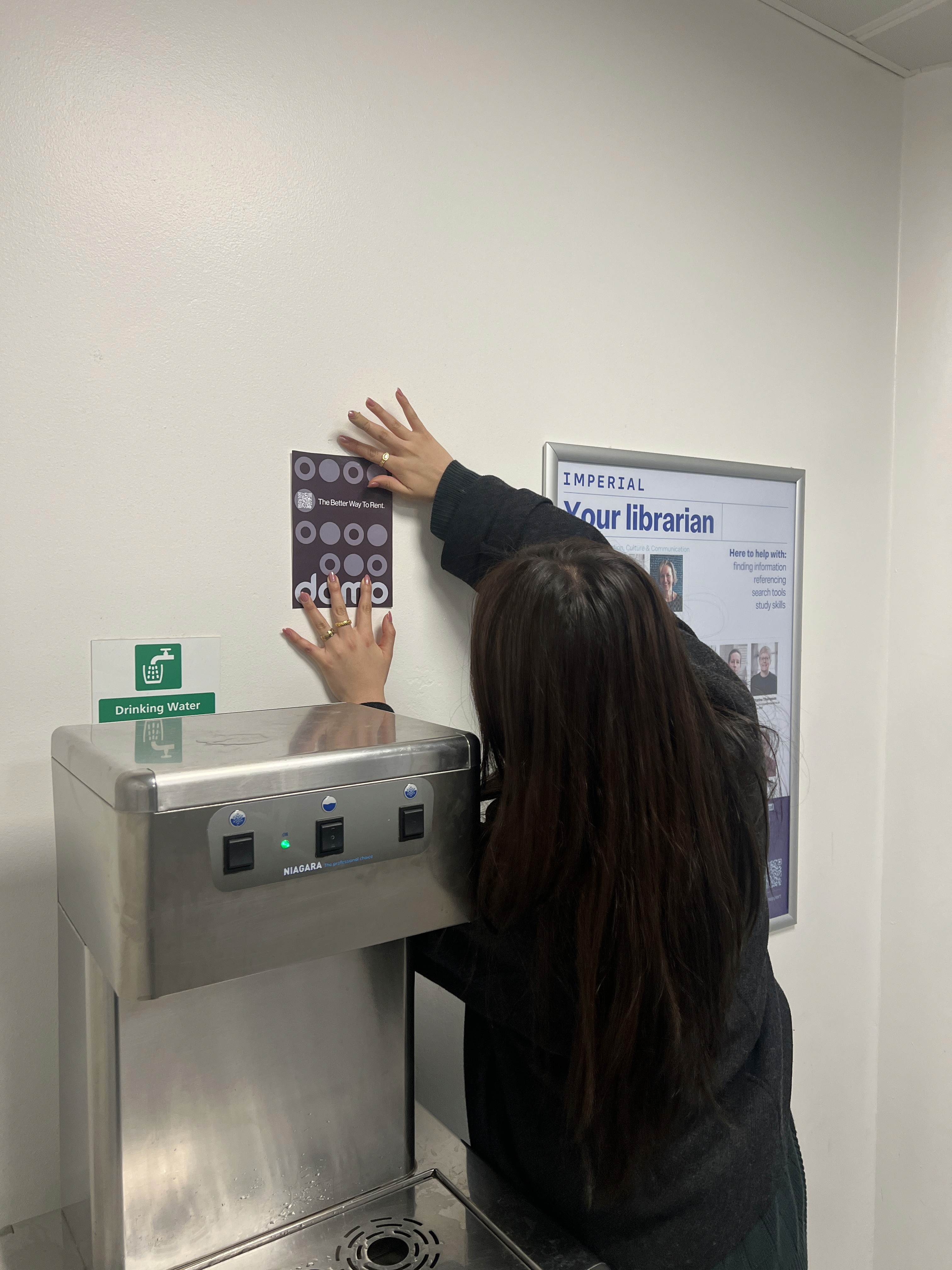
Through our outreach, we distributed 150 QR-code flyers and placing 30 posters around campus.
We secured 40 sign-ups, strongly validating renter demand for Domo.
Measuring Onboarding Time
To compare onboarding times, we ran a simple test:
Traditional agencies:
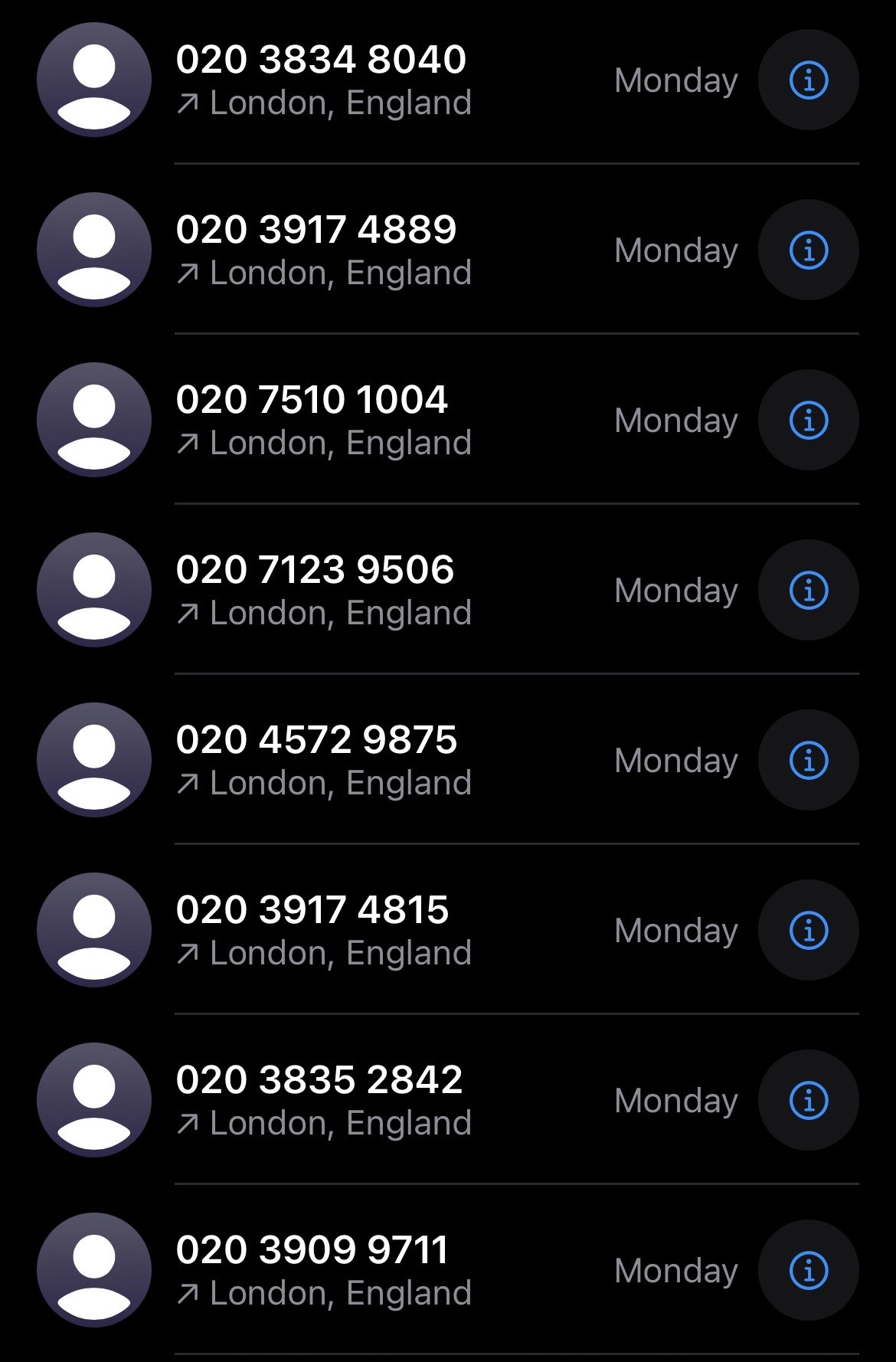
We posed as renters and called 8 East London agencies
Only 3 answered, with calls averaging 3 minutes.
Domo
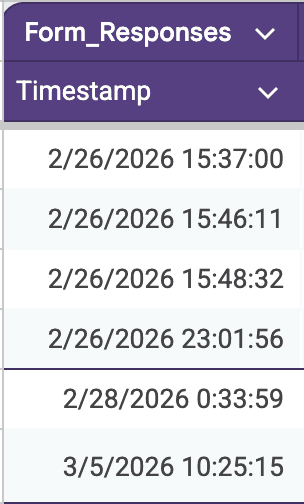
We timed 5 applicants using Domo's onboarding survery
The survey also averaged 3 minutes
While the base time is identical, Domo's value lies in doing it once. Renters only have to onboard once instead of repeating the three-minute process with every agency.
What we learned:
The core problem isn't the three-minute onboarding duration, but the repetition. Domo solves this by capturing renter information just once.
Repetition is the real pain: Renters hate repeating themselves, Domo eliminates this entirely.
Unresponsiveness compounds it: Missed calls and slow emails drag out a fast process.
Users crave cognitive relief: Time-poor students and professionals want to offload the mental burden of house-hunting altogether.
Confidence level:
80%
The reception and engagement from students indicate a positive signal of renter engagement. This is also backed by our waitlist. However, the sample size is too focused on students, and need more validation with young adults + professionals.
For future direction:
Product: Domo must feel like a personal assistant, not a form.
Marketing: Lead with "Never repeat yourself again" instead of generic time-saving claims.
Assumption 2: Agents lose valuable time processing renter data via phone and email.
Reasons:
Understand lettings agent’s pain points in their day-to-day work
Learn about the operational difficulties from branch managers
Measure the importance of lead conversion metrics for an agency
Define best workflow/design option for Domo
Success Metric: Gain support and insights from 9 estate agencies we reach out to.
Agent Interviews
To understand pain points that an agency has, it’s important to speak with lettings agents from large chains. For this, we interviewed two lettings agents, Rachael and Borna, who work for large and established estate agencies.

Rachael
Lettings Agent @ Strutt & Parker
With nine years of experience in the industry in both the UK and Australia, Rachael's experience resonated with our value proposition.
"At the end of the day, the more leads we get, the more opportunity we have to grow" - for Rachael, any lead generation is opportunity for growth.
Profile match is really crucial, "they were both professionals, didn't have pets or kids, we got the deal done really, really quick".
"There needs to be more. Something that helps all the major stakeholders."

Borna
Lettings Agent @ Dexter's
Though Borna only had a few months experience working as a letting's agent, his experience showed lots of insights.
A significant portion of their day is being spent on lead engagement. From ~10am to 12pm, agents call and email renters to follow up on inquiries and check if people are still looking for properties. This can continue until 2.30pm.
Lead engagement over email takes too long, and calls are unreliable. "Time is money", but email chains just drag on, while with phone calls, "You can call 50 of them, but only 15 will pick up their phones".
Time recovery: Agencies currently lose over 25% of their workday communicating with leads to secure viewings.
Lead quality: While lead volume matters, profile quality is crucial for growth, which Domo guarantees.
Expert Interviews: Executives / Owners
To understand on a branch/operational level, we also spoke with branch managers and owners for their views. We spoke with three managers/owners of estate agency branches.

Joshua Lee
Associate @ Stanley Properties
"Being able to reach out rather than wait for people to reach in and inquire - that would be my preference."
"We've got 30 people that we otherwise didn't know were looking. Here's this property we think is suitable…could be a good idea."

Ed Gormley
Director and Owner @ Hogarth Estates
"With the change in the Renter's Rights Act, it will make your proposition more enticing."
When discussing our proposition of verifying our users, Ed said "If you can really build up the proposition of what your applicants are…you are pushing against an open door."

Martin Press
Head of Sales @ Fyfe McDade
Over summer, Fyfe McDade receives 300–400 rental inquiries per month. Agents struggle to prioritise and respond within the critical 24–48 hour window.
"One of the things that we're really keen on is the speed to lead. If we don't respond to you in the first 48 hours, the first 24, we're going to lose you"
"You send an inquiry through via Instagram at 10pm at night, are we going to pick that up? No."
"If people could pre-qualify themselves…I can then know better how to prioritise them or not…for the safety of our staff."
What we learned:
Admin burden is universal: Lead qualification and follow-up are massive operational drains across all staff levels.
Quality beats time-saving: Decision-makers care more about lead quality; Domo’s pre-verification is our strongest selling point.
CRM integration is mandatory: Independent agencies won't adopt standalone tools; we must integrate with their existing software.
Regulatory urgency: The May 2026 Renters' Rights Act makes pre-verified, qualified tenants highly valuable right now.
Confidence Level
65%
Agent feedback proves smaller agencies lack resources, while executive feedback gives DOMO a clear direction. Our main hurdle is convincing disconnected executives to adopt a solution for an operational problem they don't personally feel.
For future direction:
Optimise Domo for speed-to-lead. Target independent, lean-team London agencies (Zones 1–3) with large portfolios and external CRMs like Alto.
Assumption 3: Renters are willing to share their personal data with Domo
Reasons:
Learn current industry practices for onboarding new customers.
Test if renters are comfortable sharing their personal information with a third party.
Learn how to improve the Domo onboarding process.
Success Metric: Receive personal and financial information from 5% of our waitlist.
Industry Practices: Primary Research
To identify exactly what information is required for tenant pre-checks and full background checks, and to spot any discrepancies in industry practices, we used a two-pronged approach: we posed as prospective renters to send inquiries, and we directly consulted our partner agencies about their requirements.
Martin Press
Head of Sales @ Fyfe McDade
Joshua Lee
Associate @ Stanley Properties
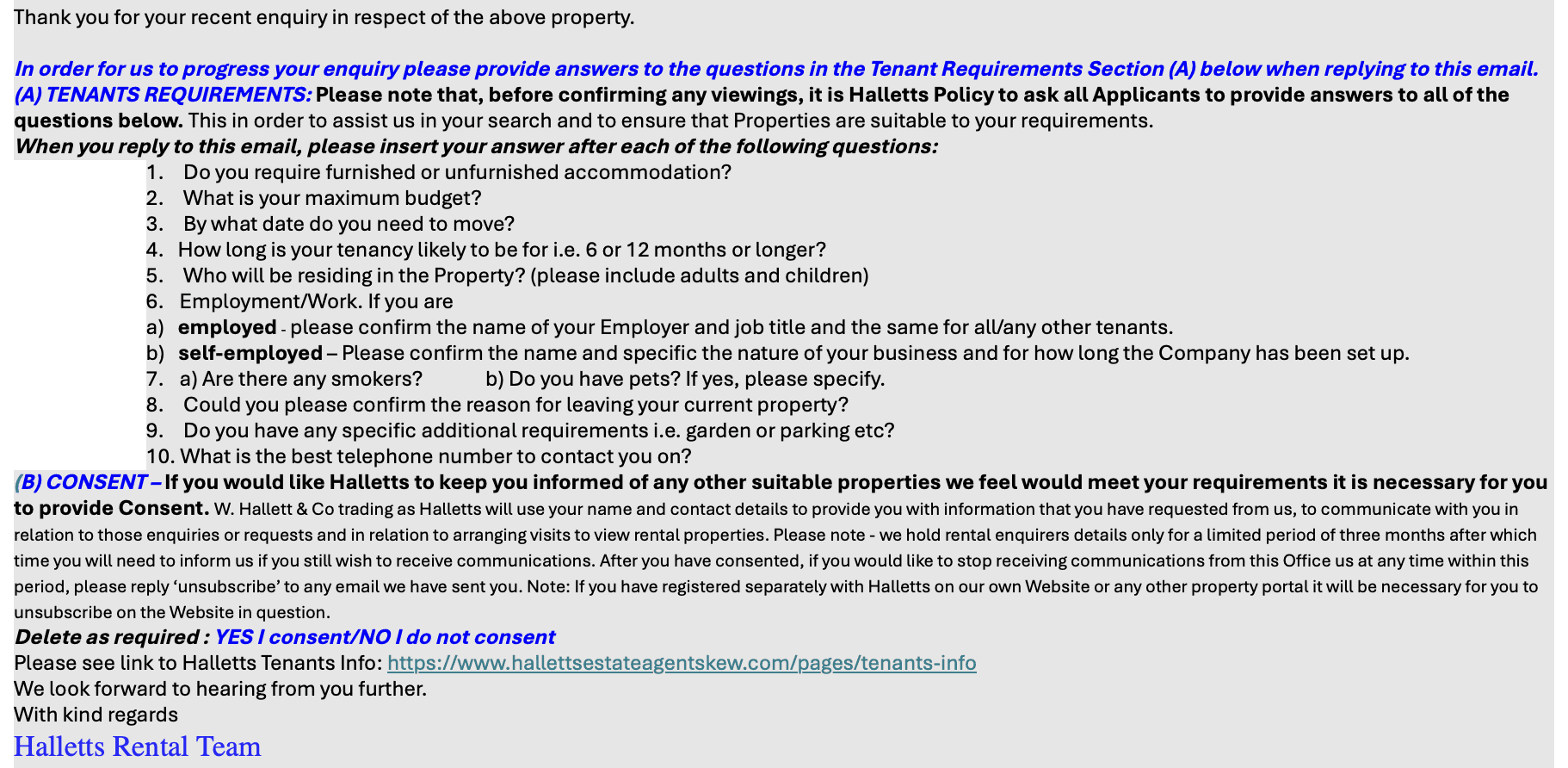
Email between Joshua Lee and Alex
Hi Alex,
Thank you for your email and following up.
[Some parts of email removed for unrelated context]
In terms of the information that we need for confirming a viewing, then certainly Full Name, Contact Number and Email Address.
For ease of reference, will work on a Traffic Light System for what would be needed at each stage.
Red (Initial search details)
Amber (For a viewing)
Green (Submitting an offer and referencing)
Hope that helps for now.
Kind Regards
Joshua Lee
Associate (MARLA)
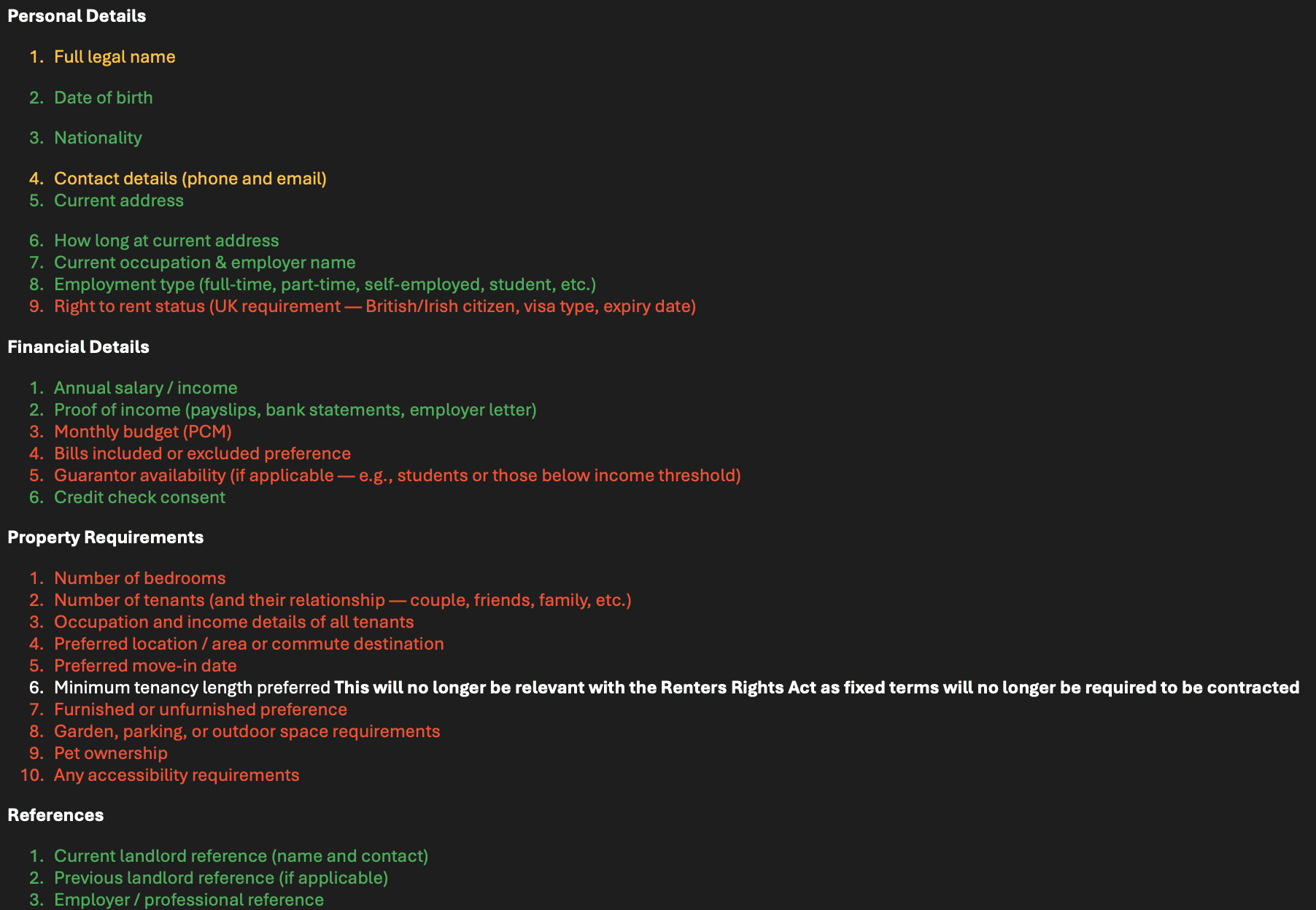
Screenshot from required information from Joshua Lee
Email between our member and estate agency.
Social Media
Expanding our marketing to Instagram (@domo.rent) allowed us to test Domo's appeal beyond our initial student base. We achieved over 3.4k views, with 66% originating from non-followers. This strong organic reach and engagement from outside our immediate network clearly validates a wider market demand for our platform.
From Interest to User: Conversion Validation
To finalise validation and measure conversion rates, we ran a 'Wizard of Oz' test, sending an onboarding form to our waitlist to gauge true user intent.
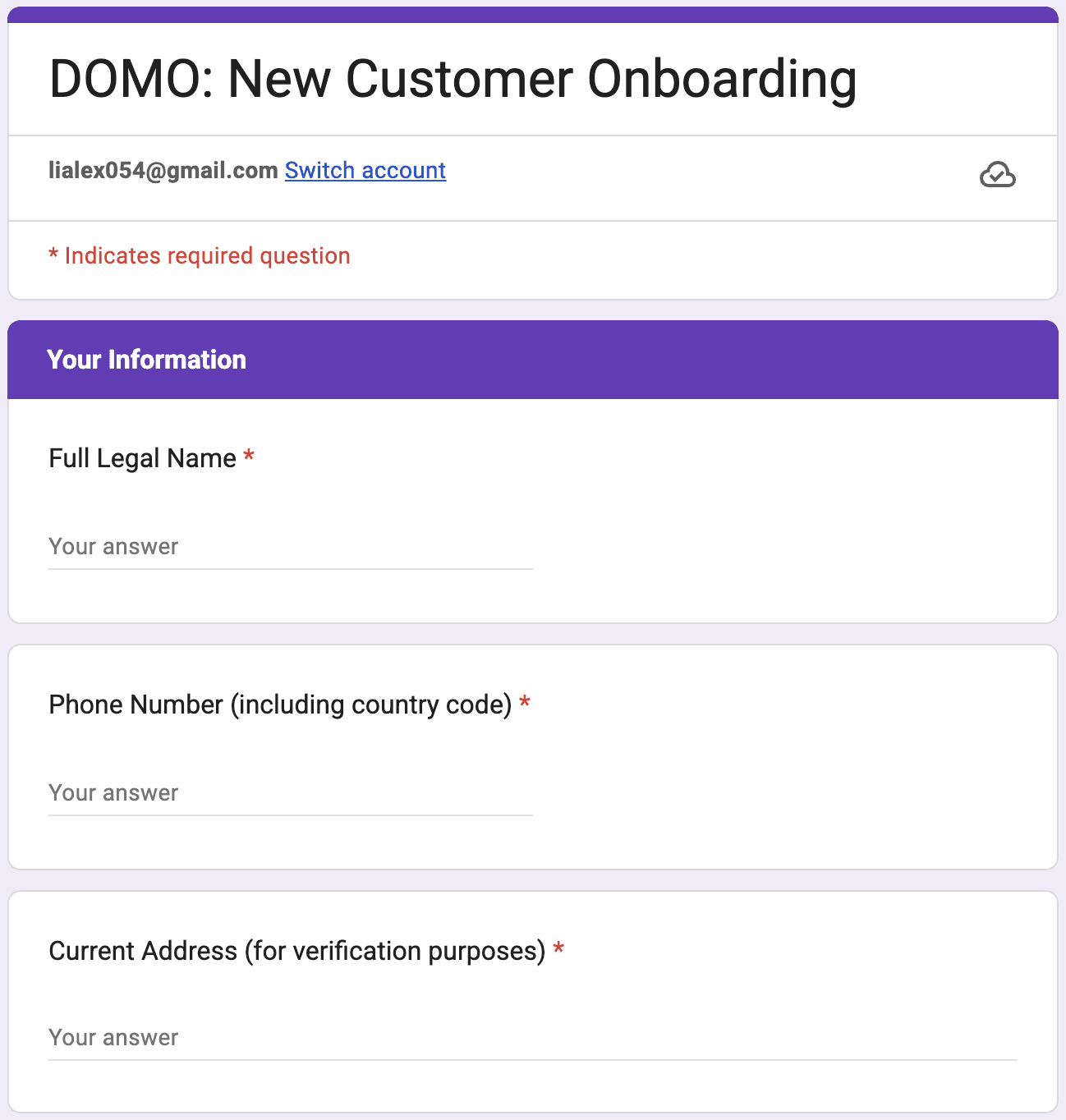
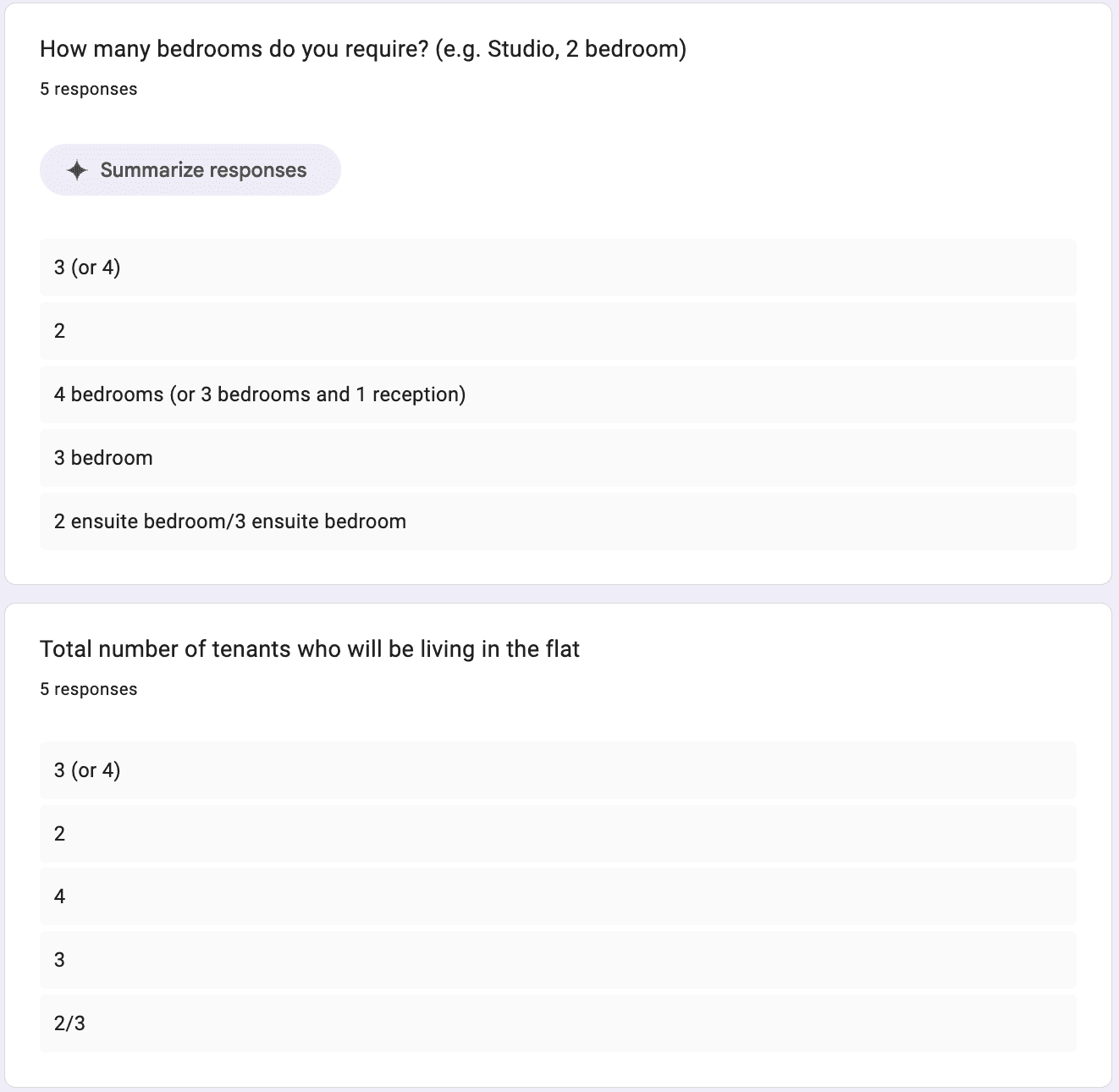
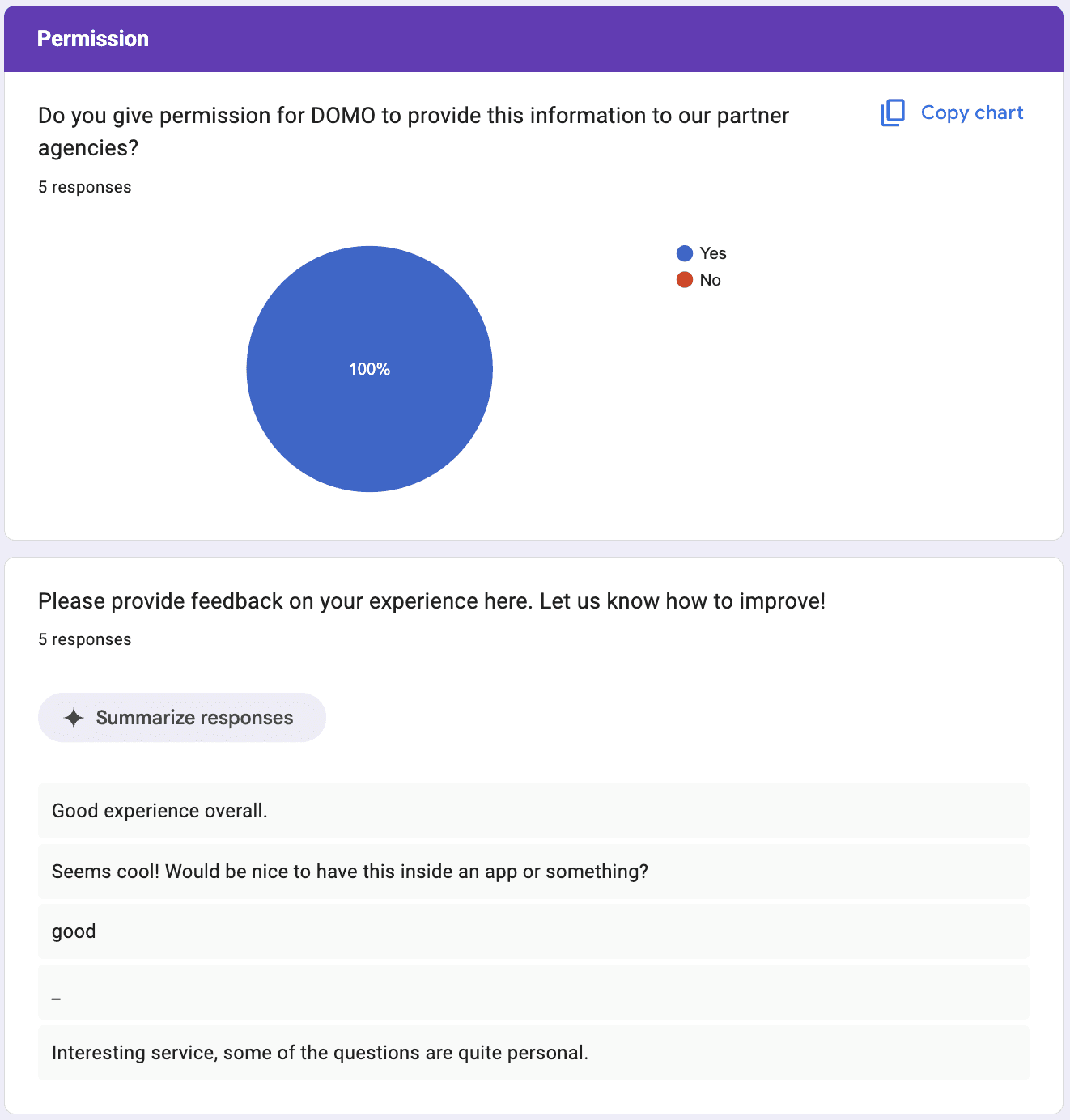
We achieved a strong 16.7% conversion rate (5 out of 30 waitlist emails) on our onboarding form. Reaching this milestone with zero budget and strict time constraints successfully validates our initial success criteria.
What we learned:
13% of waitlisted renters completed full onboarding, proving a genuine willingness to share sensitive data with our platform.
Financials first: Agents prioritize financial viability above all other profile preferences.
Trust is a design requirement: Renter hesitation around personal questions means data transparency must be baked into the UX.
Strong baseline demand: Converting 1 in 8 users on a zero-budget, lo-fi MVP is a powerful signal of intent.
Confidence Level
90%
Our current conversion rate is a strong baseline for a lo-fi MVP. Upgrading to a high-fidelity platform with refined outreach will naturally increase this, as feedback proves renters are highly cooperative when trust is established.
For future direction:
Implement a transparent, GDPR-visible UX that balances the robust financial pre-verification agencies need with the frictionless onboarding renters want.
Assumption 4: Agencies are willing to pay per viewing for qualified renters.
Reasons:
Learn what industry competitors are charging for best financial positioning
Build a viable and sustainable business model
Success Metrics: Receive verbal or written interest from estate agencies.
An Opportunity
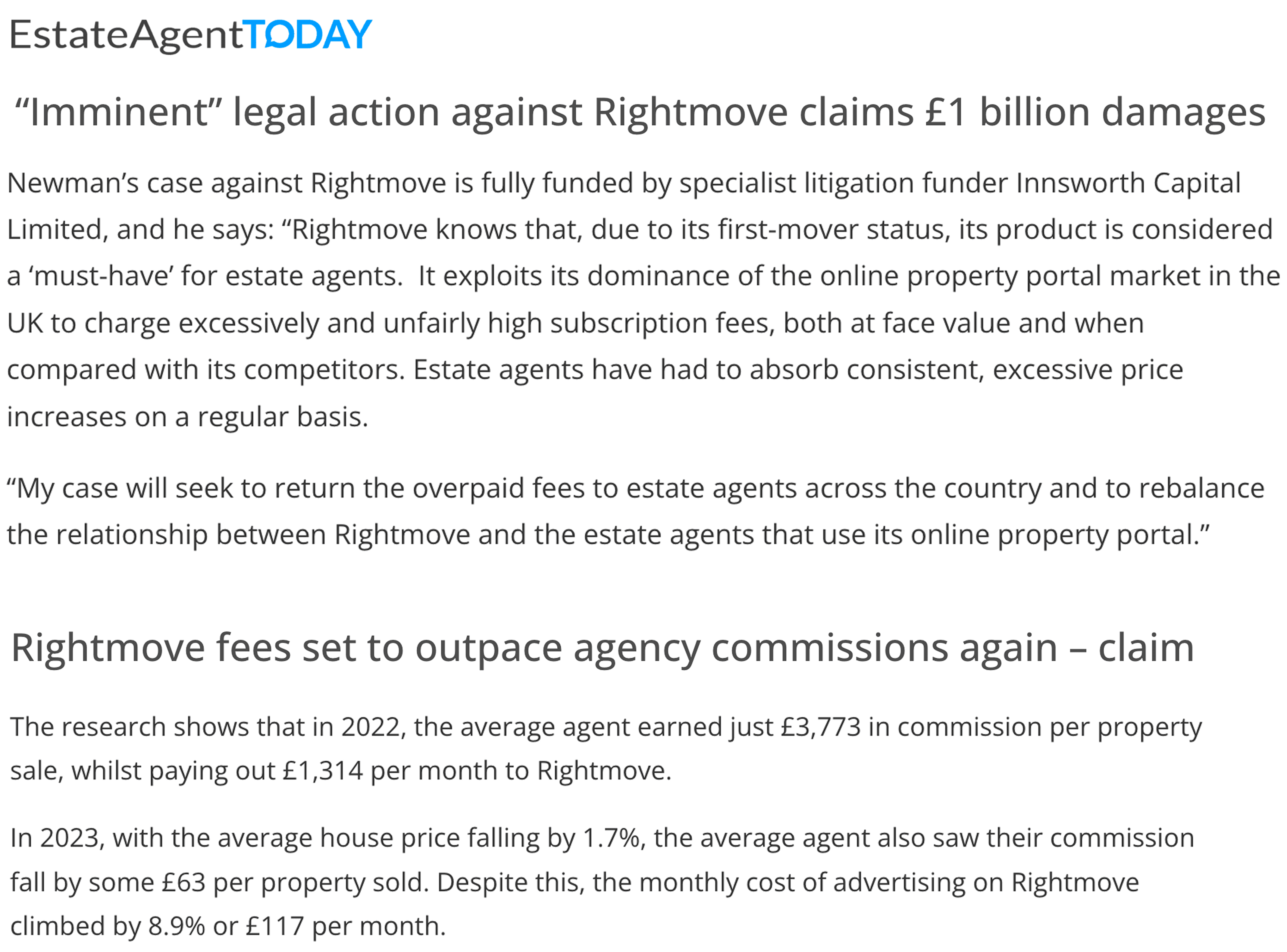
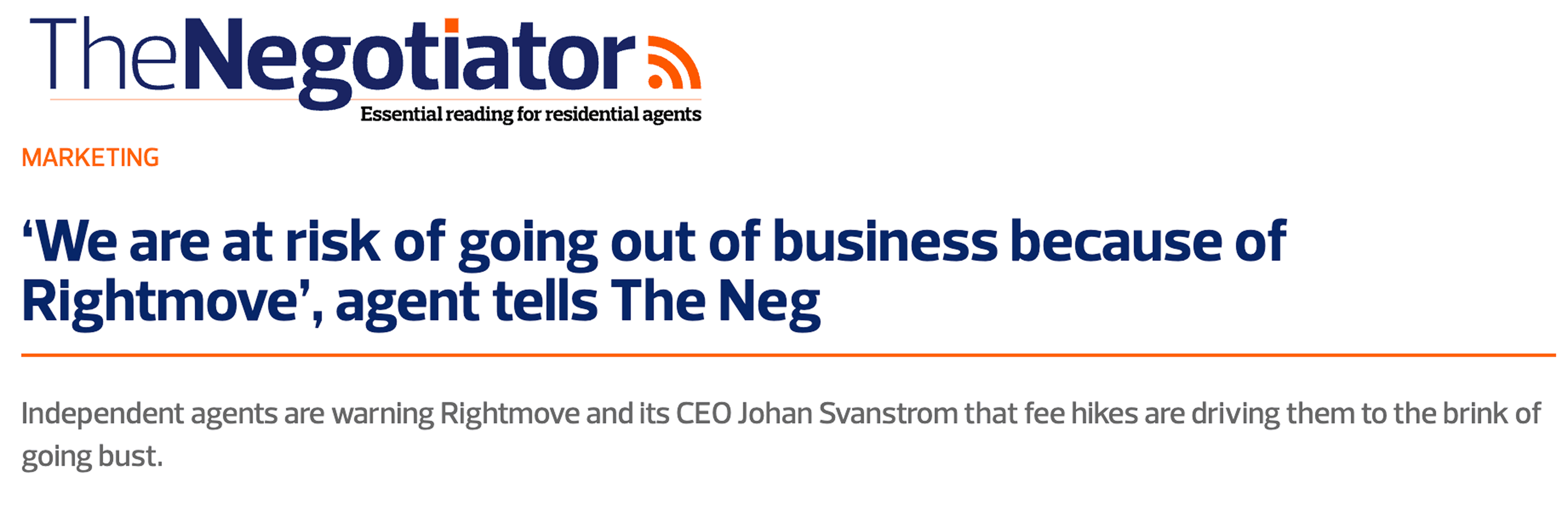
While incumbents like Rightmove and Zoopla hide their pricing, mounting frustration over Rightmove's 'absurd fees' culminated in a £1 billion class-action lawsuit in November 2025. This growing backlash from independent agencies proves a strong market demand for transparent, cost-effective alternatives.
Identifying First-Adopters
Target Market: Independent London agencies (Zones 1–3) with 30–60 properties.
Fewer resources: Unlike giants like Foxtons, lean teams are highly motivated to adopt automation.
Cost-sensitivity: Our alternative pricing is more attractive to them than Rightmove's flat fees.
Workflow flexibility: They use integrable, external CRMs (like Alto) rather than rigid, custom software.
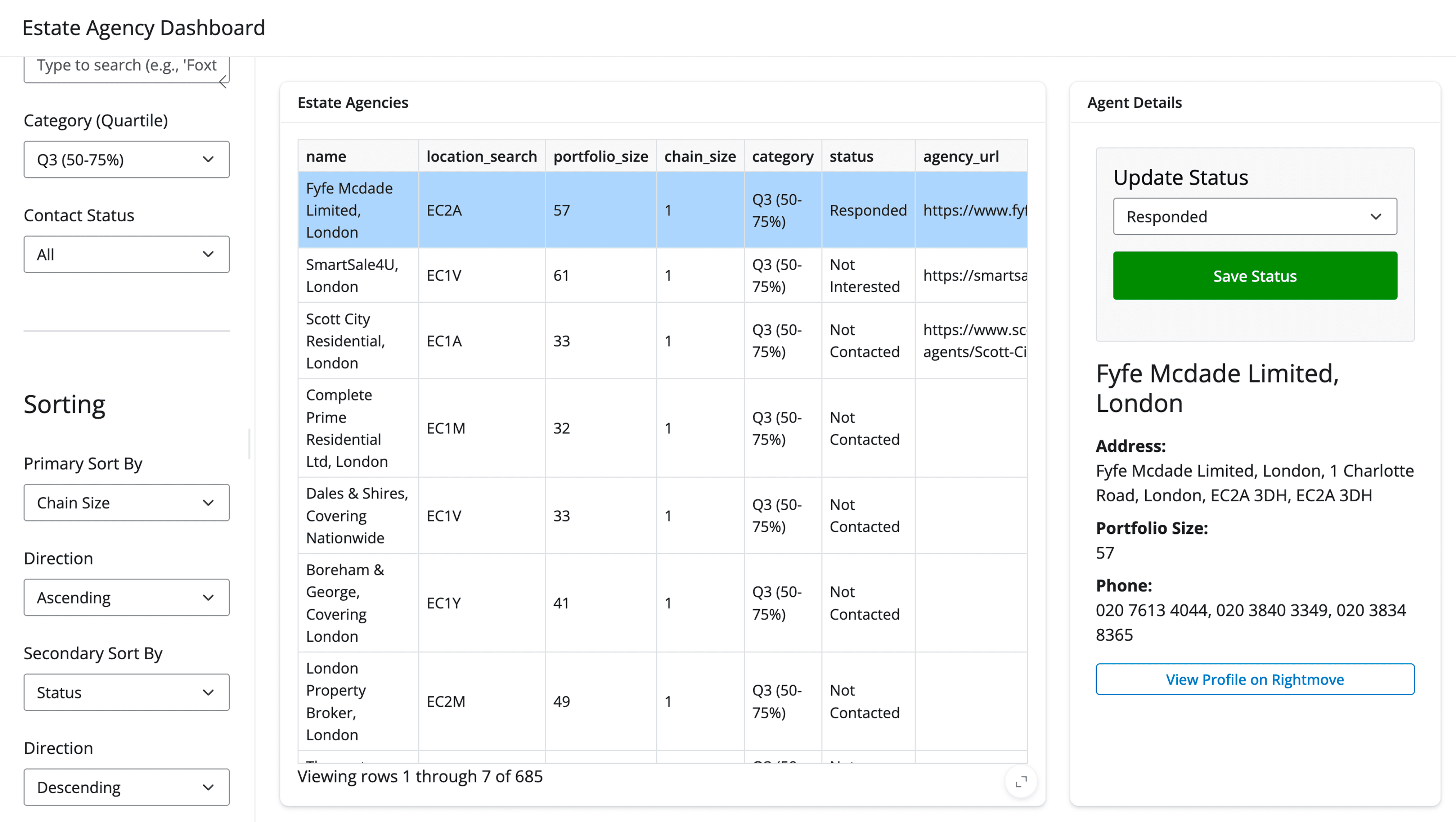
Outreach Results (via custom web-scraper):
Email Validation: Emailed 247 of 685 identified targets, yielding a ~3% response rate (6 replies).
Call Validation: Cold-called 7 agencies, achieving a ~50% connection rate and securing direct interest from one agency. With 4 onboarded, we achieve a conversion rate of 50% post-demo.
Engagement with First-Adopters
Through our outreach, we successfully onboarded four partner agencies into our pilot program, scheduling in-person meetings to analyse their operations and costs firsthand.

Martin Press
Head of Sales @ Fyfe McDade
Fyfe McDade pays over £85,000 to Rightmove annually, £2,000 per month for Zoopla, and uses the free tier of OntheMarket.
In terms of ratio of lead generation, Rightmove brings over 50% of the viewings, Zoopla brings in around 30% and OntheMarket brings in around 10%, with the rest of the leads from natural streams like walk-ins.
Any new platform which offers greater product and analytics offerings are welcome, and will definitely try it.
Ed Gormley
Director @ Hogarth Estates
At Hogarth Estates, they pay around £1800 per branch at Rightmove per month (£21600 per year), about £1000 for OntheMarket, and £700 for Zoopla.
Rightmove brings in around 70% of their leads, while Zoopla is a dying business as their offerings are degrading compared to its competitors.
If we can qualify our customers and verify before bringing them for a viewing, will be more than happy to pay over £5 for a lead.
Joshua Lee
Associate @ Stanley Properties
Property portals like OnTheMarket are paid as a flat fee subscription, but OnTheMarket has brought Stanley Properties zero customers in his three to four years at the agency.
With OnTheMarket not bringing in customers, he has tried convincing his director that the unqualified customers taking up times for viewings and not putting in offers are hard to justify the cost.
Joshua agrees that pay per viewing is much more valuable when you know what you're paying for
Wizard of Oz: Trial Run
For our final experiment phase, we matched users with pilot agencies by sharing anonymised renter profiles and property requirements.
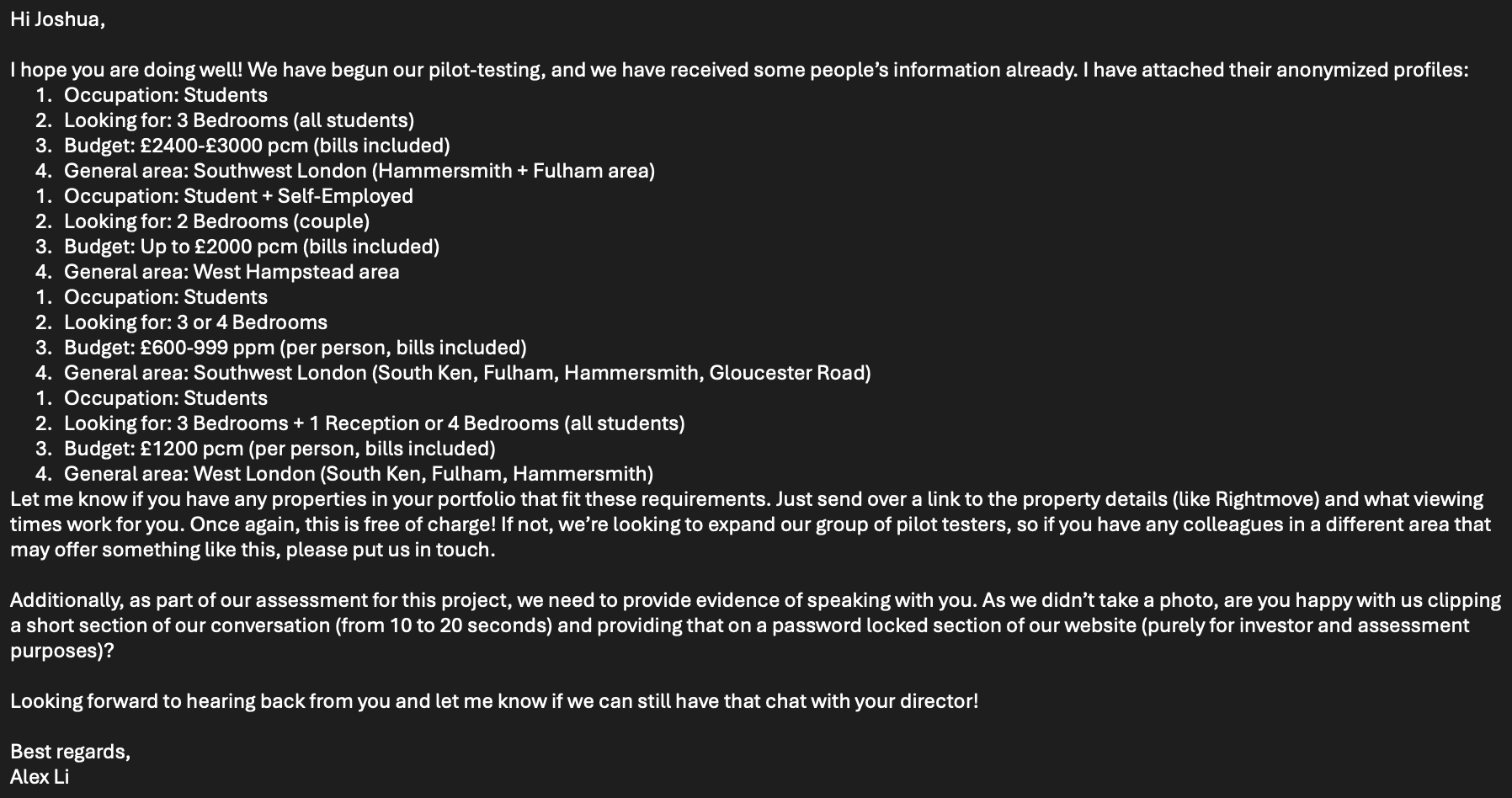
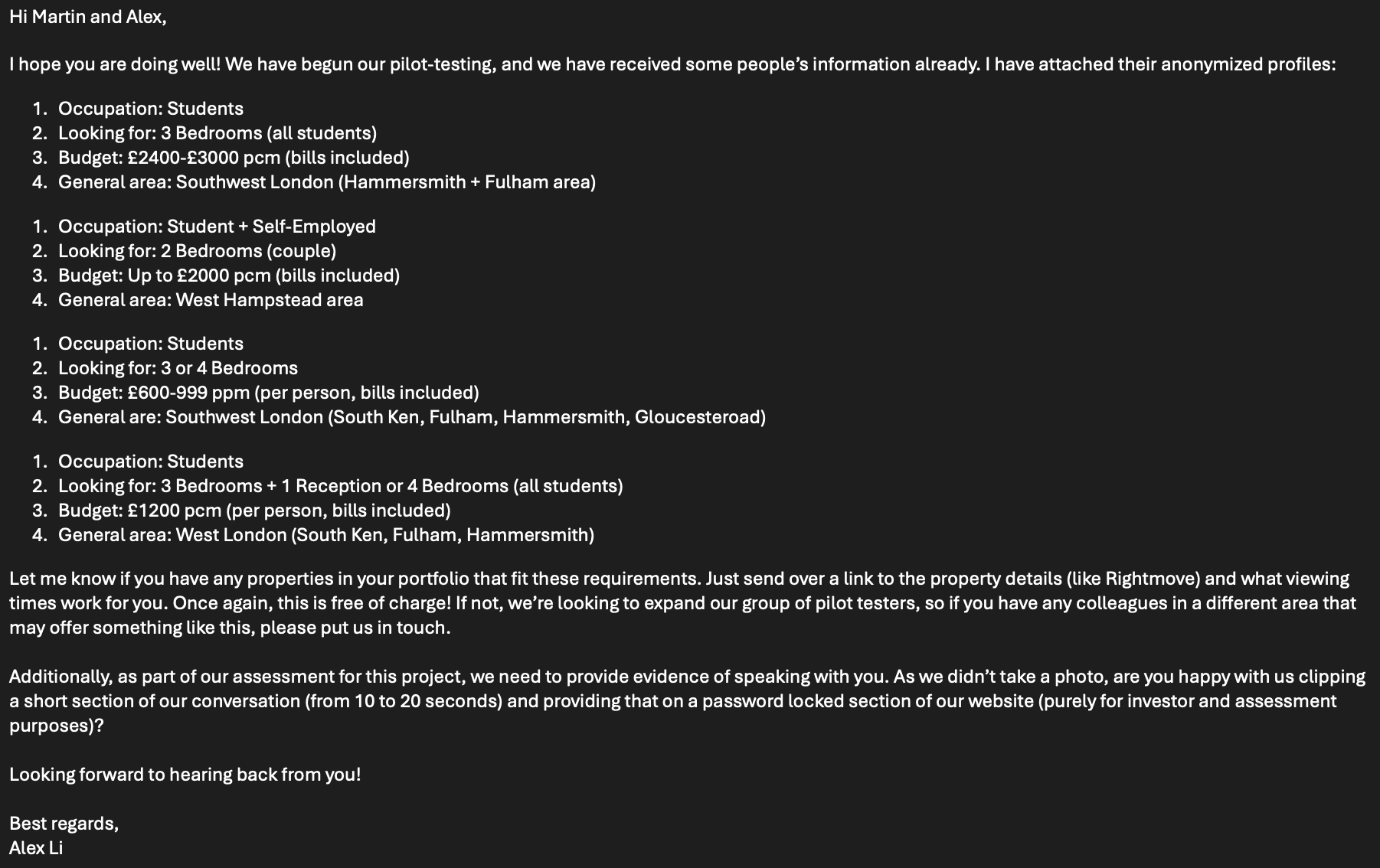
The agencies responded:
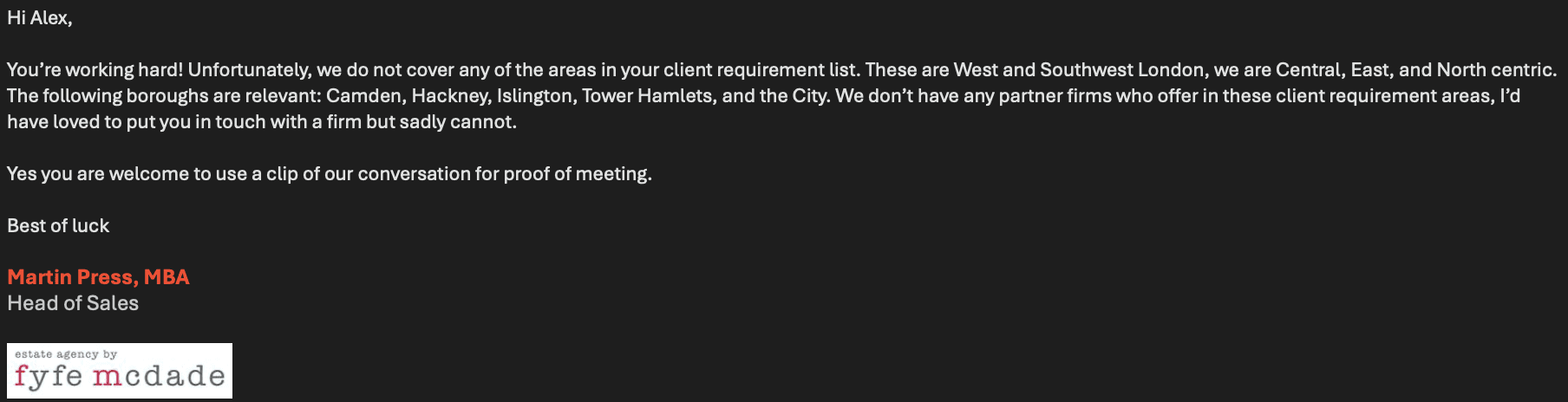
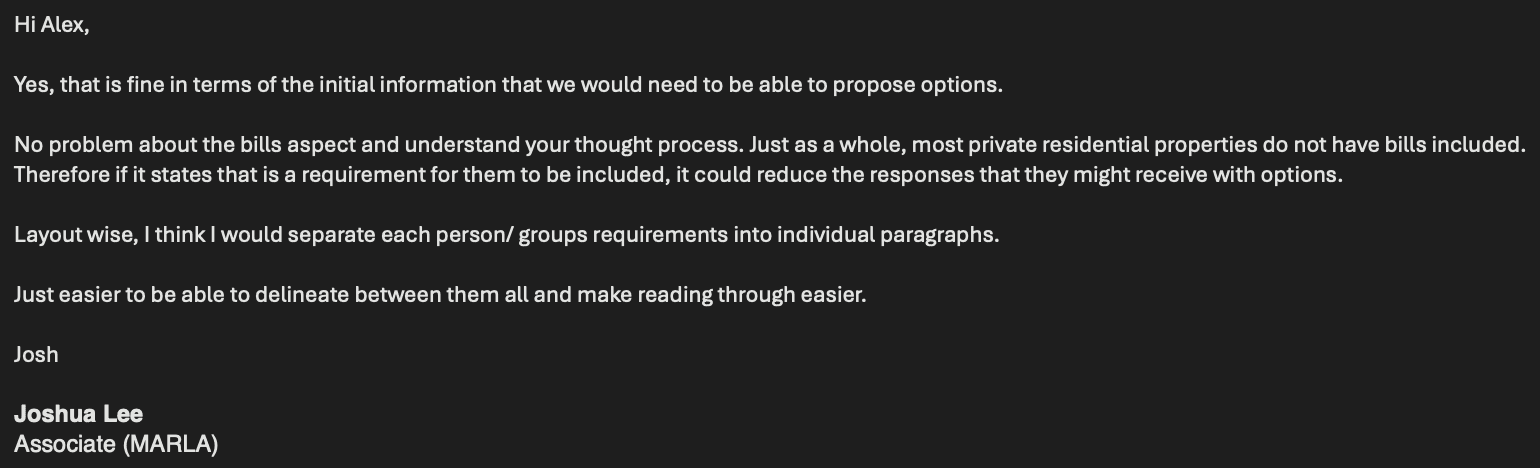
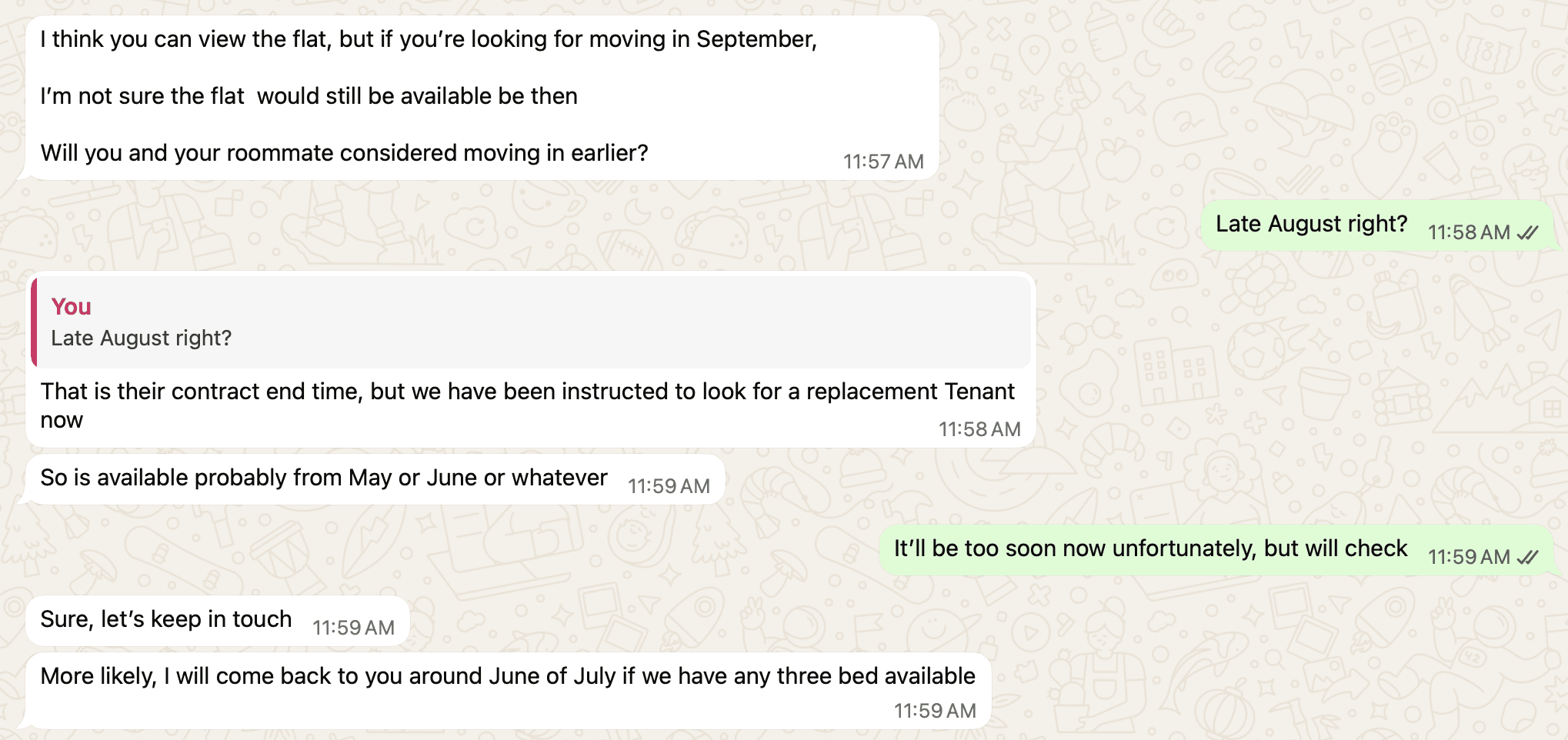
When pitching our users to non-partnered agencies, we received zero matches. Agents noted that our users' required August/September move-in dates are too far out (six months) to begin a property search.
Agent 1:

Agent 2:
What we learned:
Pricing Validated: Executives confirmed a willingness to pay £5 per verified viewing. At an estimated £500/month, DOMO undercuts Zoopla’s £700/month floor while delivering higher-quality leads.
Flat Fees are Failing: Agencies are tired of paying ongoing subscriptions for zero return (e.g., OnTheMarket), making them highly receptive to our model.
Seasonality is Critical: March is too early to secure September move-ins.
Confidence Level
60%
While our pricing is solidly grounded in a bottom-up comparison with actual Rightmove fees, true market demand remains unverified until we secure actual sales or Letters of Intent (LOIs).
For future direction
Lead B2B commercial pitches with our clear cost-efficiency advantage. To capture the student rush, we will align our timeline with market seasonality: starting renter onboarding in June and launching the MVP in July.
Assumption 5: Domo can integrate with agency tools and stay compliant
Reasons:
Domo processes and integrates customer data across CRM systems, requiring compliance with strict data protection regulations such as GDPR.
The product must satisfy two critical conditions simultaneously: legal compliance and technical feasibility.
If either the regulatory requirements or the technical implementation prove unworkable, the product is not viable.
Assumption 5 is critical because Domo’s survival depends on balancing two inherently conflicting constraints. Legally, processing personal data requires strict GDPR adherence to avoid becoming a business liability. Technically, Domo must reliably sync data across proprietary, fragmented CRM architectures. Because the most efficient technical solution may be legally non-compliant and vice versa, Domo must find an implementation that perfectly satisfies both.
Success Metrics: A technical integration proof-of-concept with agency CRM systems, with no critical compliance or reliability issues flagged.
GDPR Research
We conducted in-depth research into the General Data Protection Regulation (GDPR) to understand the legal requirements surrounding the storage, processing, and transfer of personal data within the EU.
This included reviewing:
Lawful bases for processing personal data
Data minimisation and purpose limitation requirements
Consent management requirements
Data subject rights (access, deletion, portability)
Security and storage obligations for personal data
Outreach to Real Estate CRM Partner Companies
To validate whether CRM integration would be possible in practice, we reached out to several CRM companies and explored their integration capabilities and partner ecosystems. We went through integration/API documentation, researching developer documentation as well as contacting CRM companies to see if they have open APIs which allow 3rd party apps to connect with their platform.

Through this process we confirmed that many CRM systems provide API access and integration frameworks, making Domo’s integration approach technically achievable.
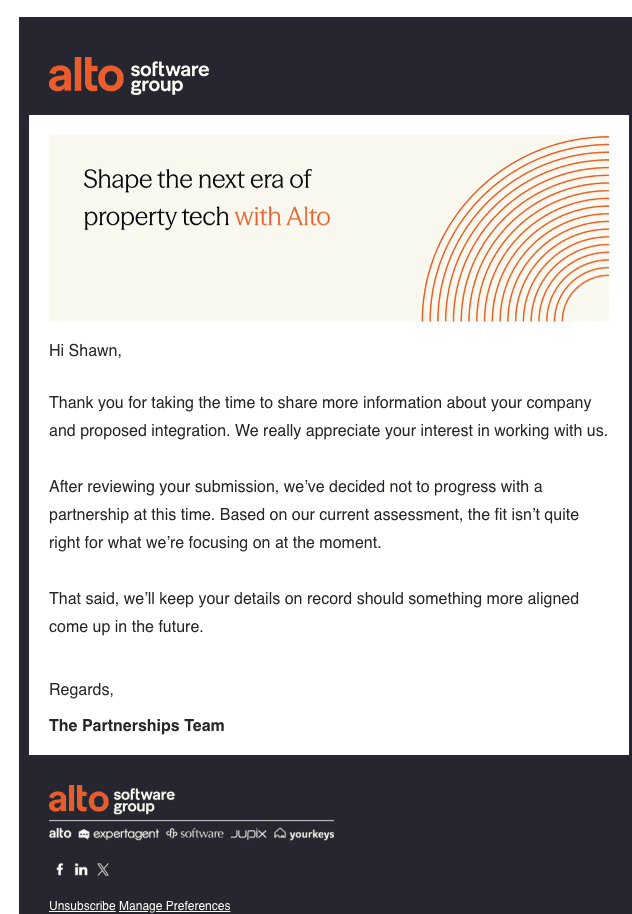
Our assumption that CRM providers would willingly partner with us was invalidated, as several rejected our outreach due to our early stage. We can mitigate this roadblock in the future by building independent industry traction and leveraging our partner agencies to demand the integration directly from their CRM reps
Low-Fidelity Prototype Development
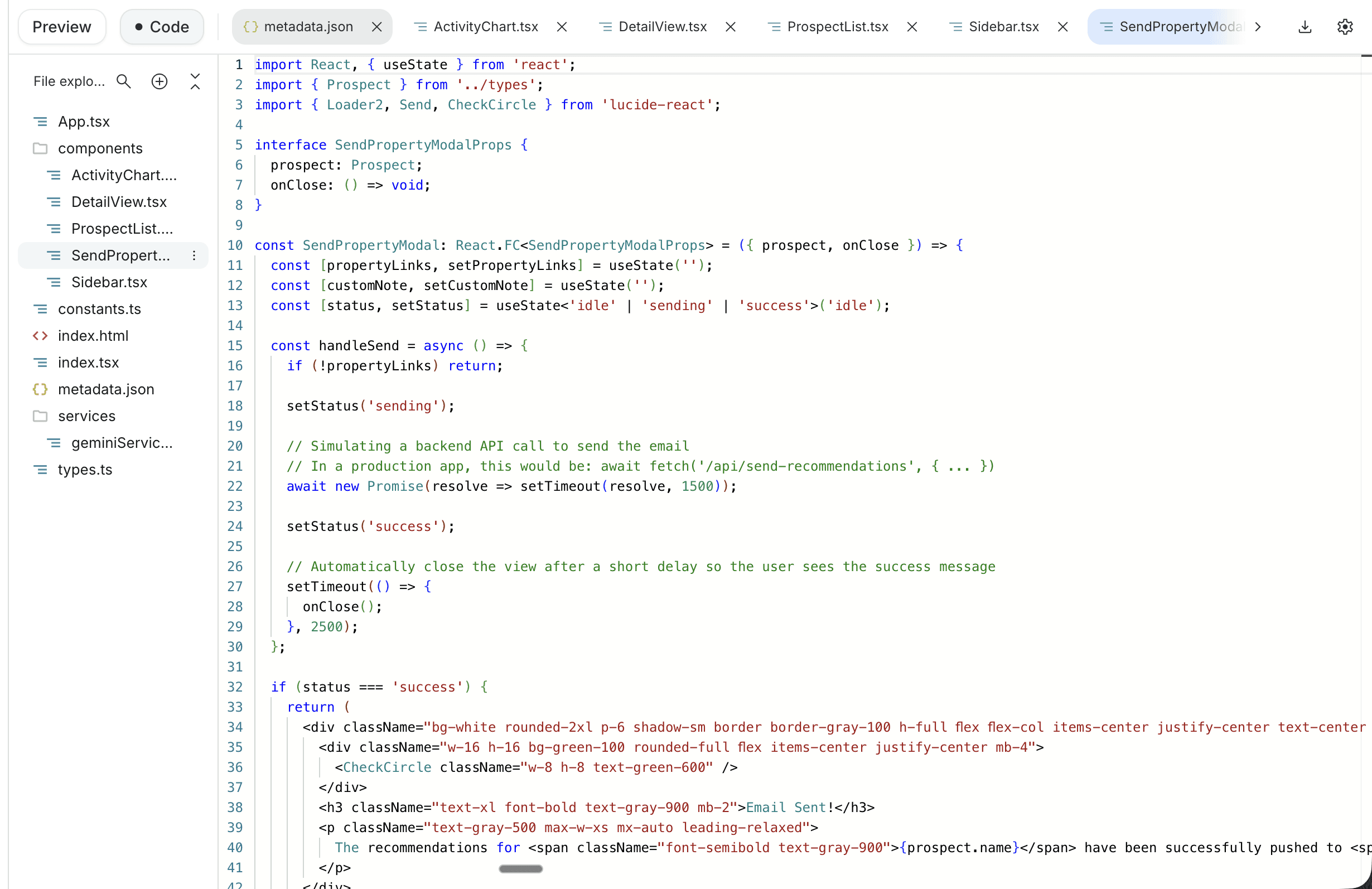
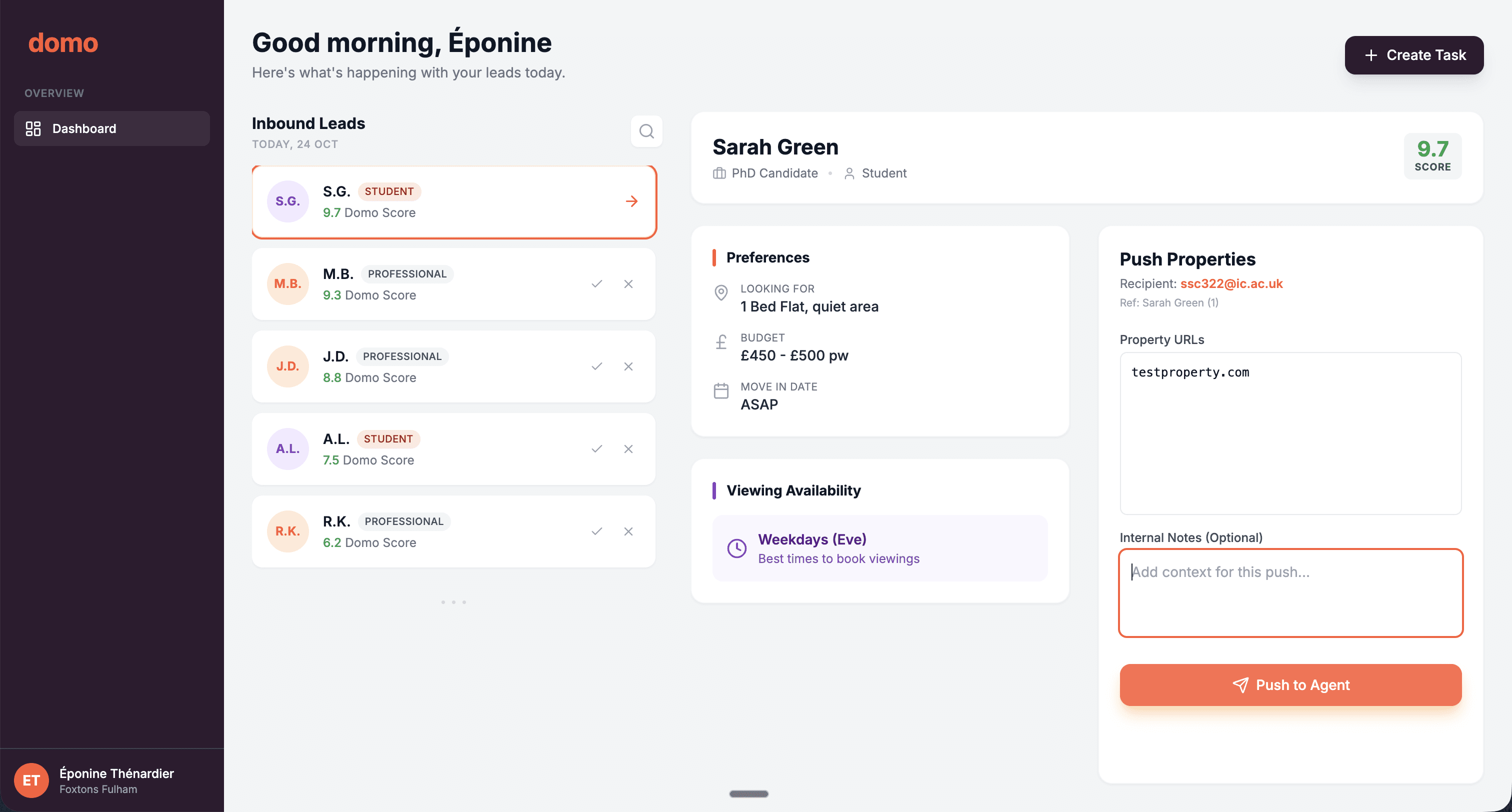
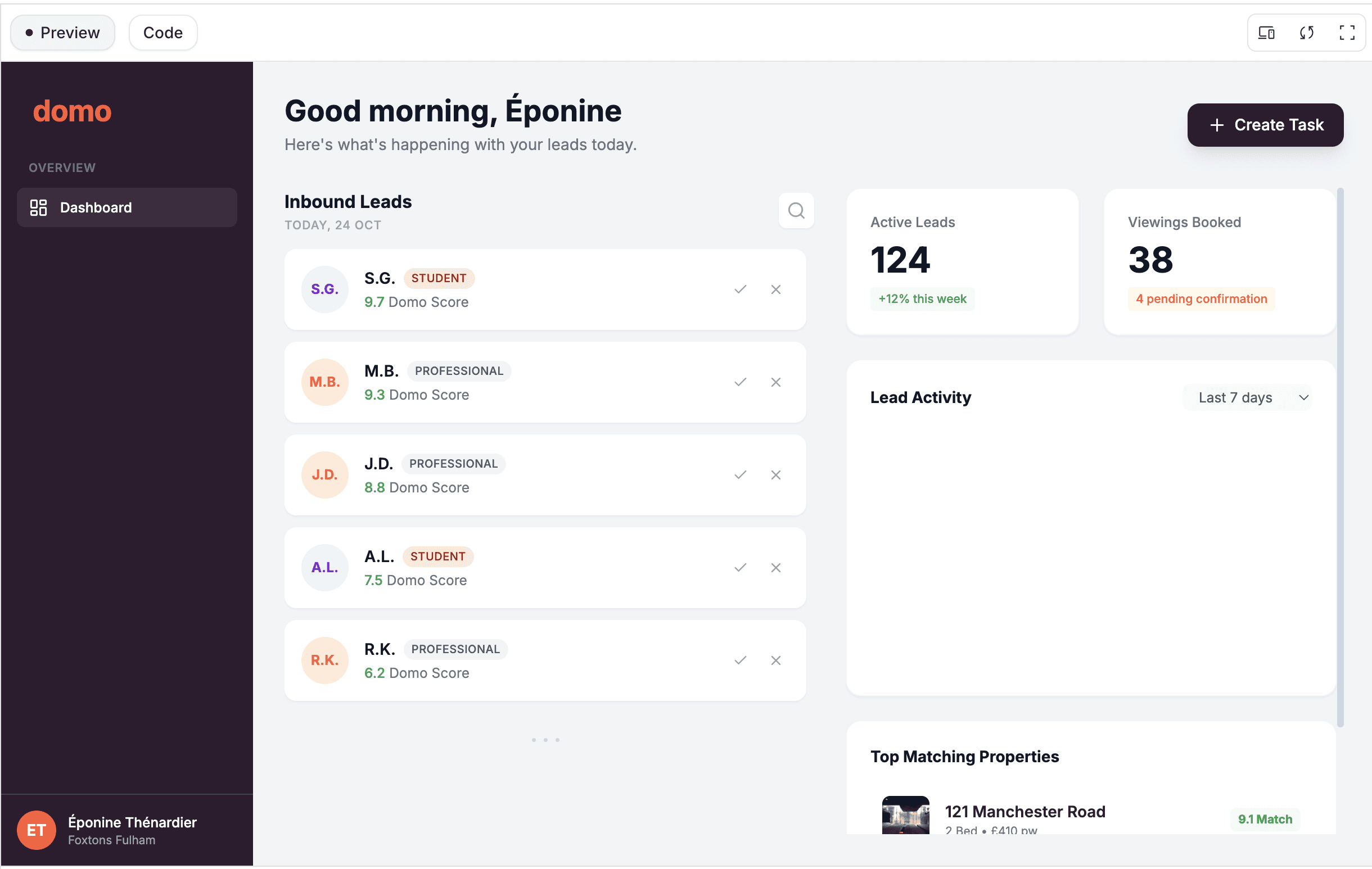
We developed a low-fidelity prototype of the Domo platform to test the core concept and demonstrate how the system would function in practice. The prototype focused on mapping the main user workflow, including how users would interact with the platform and how CRM data would be accessed and displayed. By visualising the product early, we were able to identify potential usability issues, refine the overall system structure, and communicate the idea more clearly to technical reviewers and potential users. This helped validate that the proposed functionality and workflow are realistic and feasible to implement in a full product.
What we learned:
Domo is both legally compliant and technically buildable, with specific implementation decisions confirmed through research and prototyping. Here are the key takeaways.
GDPR & Security: Fully achievable. By using EU-based AWS hosting and strict data anonymization, user privacy is protected until mutual consent is granted.
Architecture Validation: Our lo-fi prototype confirms the core workflow is fully buildable with no fundamental technical blockers.
CRM Integration Risk: While technically straightforward to connect via open APIs, the primary hurdle is a business one: CRM providers may simply refuse to partner with us.
Confidence Level
95%
Based on our prototype, validation and research, we are very confident that building a platform like Domo is feasible within our budget & team.
For future direction:
Data handling transparency should be surfaced in the UX. GDPR compliance is both a legal requirement and a trust signal for both renters and agency partners.